Scotland Health Shares Update on State Health Plan Network Decision and What It Means for Local Patients
Print This Page

|
- September 15, 2026 | News Category: Hospital News
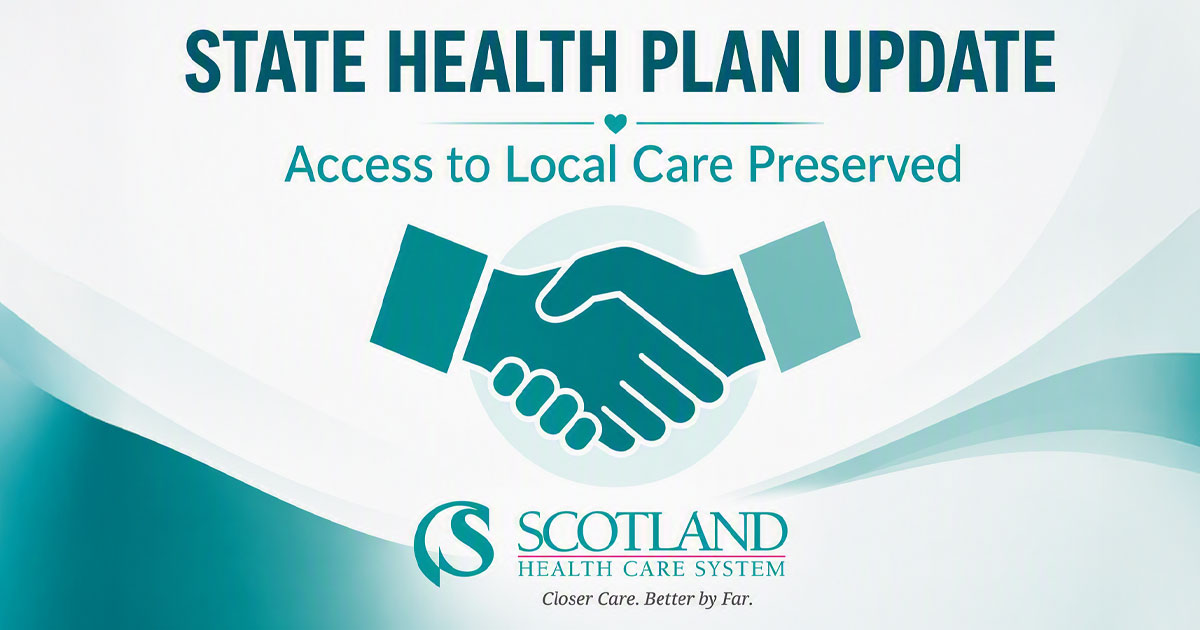
A recent decision regarding the North Carolina State Health Plan's provider network structure will allow state employees, retirees, educators, and their families to continue receiving care through Scotland Health Care System.
Over the past several months, Scotland Health has worked closely with partners at Atrium Health to address concerns related to the State Health Plan's new provider network structure scheduled to take effect in 2027. Under the State Health Plan's redesign, healthcare providers will be placed into different benefit tiers that impact employee costs and access to care.
As a result of those discussions, Scotland Health will participate in the second Access Tier of the State Health Plan network. For most state employees and retirees who receive care through Scotland Health providers, benefits and out-of-pocket costs are expected to remain largely comparable to what they experience today.
Most importantly, this means many state employees will be able to continue receiving care from the physicians, specialists, and healthcare teams they know and trust in their own communities. The ability to maintain established patient-provider relationships is critical to ensuring continuity of care, particularly for those managing chronic conditions or ongoing health care needs.
While this outcome provides important clarity for patients, Scotland Health believes it is equally important to recognize the broader implications of the State Health Plan's decision.
"While we are relieved that our patients will continue to have access to their local providers without significant disruption, the new network structure creates challenges for rural hospitals across North Carolina,” said David Pope, President and CEO at Scotland Health. “Many rural healthcare organizations already operate with limited resources, and policies that further increase financial pressure on these hospitals can have long-term consequences for the communities they serve."
Across the state, rural hospitals continue to face unique challenges, including workforce shortages, lower patient volumes, and financial constraints that differ significantly from those experienced by large urban healthcare systems. Healthcare policies that do not fully account for those differences can place additional strain on organizations that serve as essential access points for care in rural communities.
Scotland Health remains committed to advocating for rural patients by working alongside state leaders, healthcare partners, and fellow rural providers to address concerns about the long-term impact of network and reimbursement decisions on access to care.
Despite these challenges, Scotland Health's commitment to our local communities remains unchanged.
"Our mission has always been to provide high-quality health care close to home," said Pope. "We are committed to ensuring that the people who care for our children, protect our communities, and serve the public have access to the quality health care they deserve."
Scotland Health will continue to share updates as additional information becomes available regarding implementation of the State Health Plan's 2027 network structure.
About Scotland Health
Patient Links
For Employees
Partnerships

Accreditations