
Seeing Lung Cancer Before It Speaks
Print This Page

|
- November 25, 2026 | News Category: , Hospital News, Hospital News
Dr. Hector Sanchez discusses screening, early detection and bringing advanced care closer to home
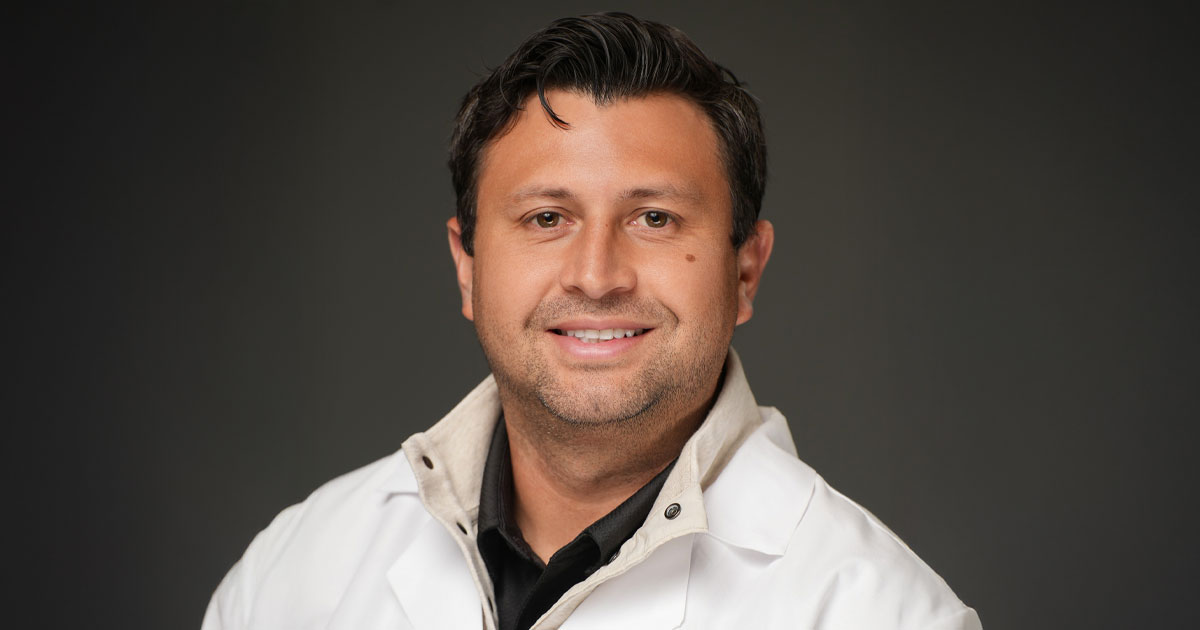
Share on Facebook Share on LinkedInFor many people, lung cancer is something they do not think about until symptoms appear. Unfortunately, by the time symptoms develop, the disease may already be advanced. That is why Hector Sanchez, MD, a pulmonary and critical care specialist at Scotland Health, is focused on helping patients understand the value of prevention, screening and early diagnosis.
A board-certified physician specializing in pulmonary disease, critical care medicine ad internal medicine, Dr. Hector Sanchez cares for patients with a wide range of respiratory conditions, including chronic lung disease, COPD, asthma and lung cancer.
During a recent interview, Dr. Sanchez shared a simple but powerful message: when it coes to lung cancer, early detection saves lives.
Understanding the Risk
Smoking remains the leading risk factor for lung cancer, but Sanchez says it is only part of the story.
"You have to look at risk factors through behaviors like smoking or exposure to harmful environmental factors," he said.
Physicians also consider family history and other health conditions when evaluating a patient's risk. Sanchez explained that questions about family medical history are more than routine paperwork. They help providers understand whether patients may benefit from additional monitoring or screening.
The relationship between smoking and lung cancer is clear, but Sanchez noted that outcomes can vary widely from person to person.
"Everybody knows someone who smoked their entire life and never developed cancer,'" he said. "But we know smoking dramatically increases the risk. In fact, most lung cancers are related to smoking."
"About 20 percent of people who smoke will develop lung cancer," Sanchez said. "That's one of the reasons our lung cancer screening programs are so important. We can identify people who are at higher risk and potentially save lives."
Catching Cancer Before Symptoms Begin
One of the most encouraging developments in lung cancer care is the widespread use of low-dose CT screening for high-risk individuals. According to Dr. Sanchez, these scans can identify abnormalities long before patients ever experience symptoms.
"The goal is to find cancer when it is still small and highly treatable," he said.
When lung cancer is detected in its earliest stages, physicians often have more treatment options available, and patients generally experience significantly better outcomes. Screening programs are designed to identify cancer before it has an opportunity to spread, giving patients their best chance for successful treatment.
Dr. Sanchez emphasized that screening is especially important for patients with a significant smoking history who meet established guidelines for lung cancer screening.
Technology Is Changing Cancer Care
Advances in imaging technology continue to improve the way lung cancer is detected and diagnosed.
"We're able to catch very small abnormalities now that we may not have been able to see before," Sanchez said.
Those advancements allow physicians to make more accurate diagnoses and create increasingly personalized treatment plans.
"We're able to come up with the right diagnosis and more accurate treatment recommendations," he said.
Sanchez also discussed the growing role of data and artificial intelligence in medicine. Modern healthcare systems now have access to large amounts of information that can help identify patients who are at increased risk and may need additional attention.
"Now we have a lot of data about cancer," Sanchez said. "It's easier to identify patients who may need screening and intervention."
Bringing Specialized Care Closer to Home
For patients in rural communities, access to specialty care can sometimes be as challenging as the disease itself. Transportation barriers, financial constraints and long travel distances often make it difficult to seek treatment outside the community.
Sanchez believes healthcare organizations have a responsibility to reduce those barriers whenever possible.
"We want to create access for our community," he said. "We want to make our communities better, and part of that is providing healthcare close to where people live."
He acknowledged that some patients may not have the resources to travel to larger medical centers.
"You may not be able to get there. You may have financial constraints to get there," Sanchez said. "When we have services available locally, we can help remove some of those difficulties."
Technology is also making collaboration between healthcare providers easier than ever before. Physicians can instantly share scans, reports and other medical information with specialists across the region, helping patients receive expert opinions without unnecessary delays.
"It's easy for us to share images and information with specialists," Sanchez said. "We're able to see things quickly and get feedback that helps us take care of our patients."
A Life-Saving Opportunity
Throughout the conversation, Dr. Sanchez returned to one central theme: awareness matters.
Patients who understand their risk factors, talk openly with their healthcare providers and participate in recommended screening programs are giving themselves an opportunity to detect lung cancer at its most treatable stage.
For Dr. Sanchez, the mission is straightforward. Identify cancer sooner, connect patients with the care they need and improve outcomes for families across the region.
"The earlier we find it," he emphasized, "the better chance we have to help."
Editor's Note: Hector Sanchez, MD is a pulmonary and critical care physician who joined Scotland Health in 2025. He specializes in pulmonary disease, critical care medicine and internal medicine and provides care through Scotland's pulmonary and sleep medicine services.
About Scotland Health
Patient Links
For Employees
Partnerships

Accreditations